As an Amazon Associate, we earn from qualifying purchases. Some links on this site are affiliate links at no extra cost to you. Our recommendations are based on thorough research and editorial judgment.

Do Nails Hold in Drywall?

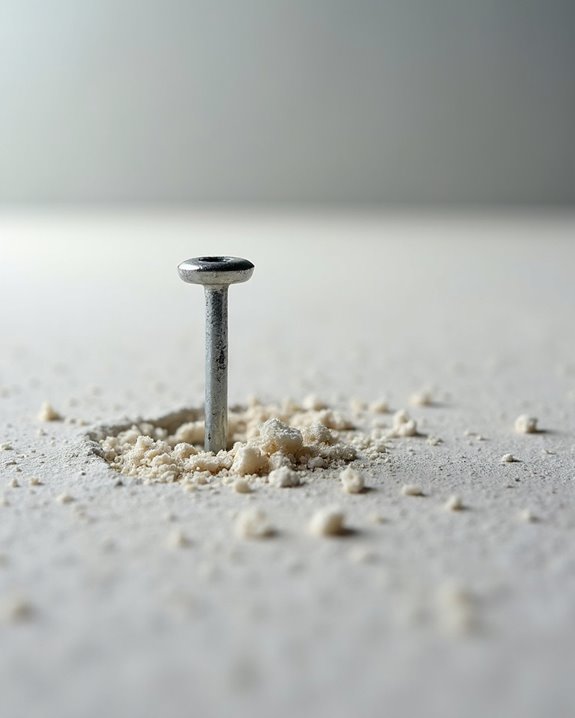
Nails can hold in drywall but with significant limitations. Standard nails support only 10 pounds maximum, while angled nails driven into studs may hold up to 20 pounds. They frequently loosen over time, causing unsightly “nail pops” and potential wall damage. For lightweight decorative items, ringed or cement-coated nails provide adequate grip, but heavier objects require screws or specialized anchors which offer 5-25 pounds (expansion anchors) to 100 pounds (toggle bolts) of superior holding capacity.
Key Takeaways
- Nails can hold in drywall but support only 10 pounds maximum on their own, or up to 20 pounds when angled into studs.
- Ringed or barbed shank nails offer better holding power than smooth nails by creating more friction with drywall material.
- Screws are superior to nails for drywall, supporting up to 100 pounds versus a nail’s 20-pound maximum capacity.
- Nails tend to loosen over time causing “pops” that damage drywall, while screws maintain consistent holding power.
- For heavier items, specialized anchors like toggle bolts or molly bolts are more reliable than standard nails in drywall.
Understanding the Basics of Drywall Construction
You may be interested

The foundation of any drywall project begins with understanding how gypsum panels attach to the underlying framework of a home. In standard construction, these panels connect to vertical wall studs typically positioned 16 to 24 inches apart, creating the structural support system essential for wall integrity. A stud finder helps locate these critical support points where fasteners will provide maximum holding power. While historically nails were favored for their speed and affordability, modern contractors increasingly prefer screws to prevent nail pops and guarantee superior weight capacity. For proper installation, professionals select fasteners based on drywall thickness: 1/2-inch panels require 1-1/4 or 1-3/8-inch screws, while 5/8-inch panels need 1-3/8 or 1-5/8-inch screws. When additional holding strength is necessary, specialized drywall anchors like molly bolts provide reinforcement, often requiring a pilot hole for maximum performance.
Types of Nails Used for Drywall Applications
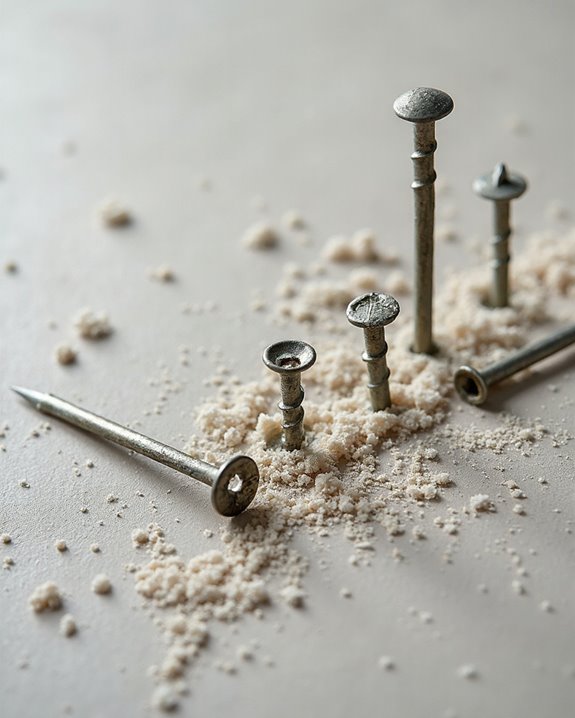
When selecting fasteners for drywall installation, contractors often consider various nail types designed specifically for gypsum board applications. Ringed or barbed shank drywall nails provide greater holding power when securing panels to wood studs, making them suitable for wall installations but less ideal for ceiling joists. Cement-coated varieties feature a smooth shank with resin coating that enhances grip strength, reducing the likelihood of the nail backing out over time.
Cupped-head or flat head designs allow for proper countersinking into the drywall surface, creating a smoother finish that requires minimal spackling. While drywall screws have gained popularity for their superior holding strength, contractors may still use nails for budget-conscious projects where cost efficiency is paramount. For heavier installations requiring robust support, specialized types of anchors like toggle bolts provide substantially more holding capacity than standard nails.
Recommended Products

Sized for easy drywall installation: #12.5 x 1-5/8 in nails; eighty pieces per pack; ideal length and gauge for securely fastening drywall to wood studs

Use for attaching drywall to wood studs

SECURE DRYWALL HOLD: A ringed shank grips the wood stud and resists nail pops, holding drywall panels tight and flat against framing for a smooth wall and ceiling surface ready for taping and finishing. That delivers a reliable hold you can count o
Weight Capacity: What Nails Can Actually Support in Drywall
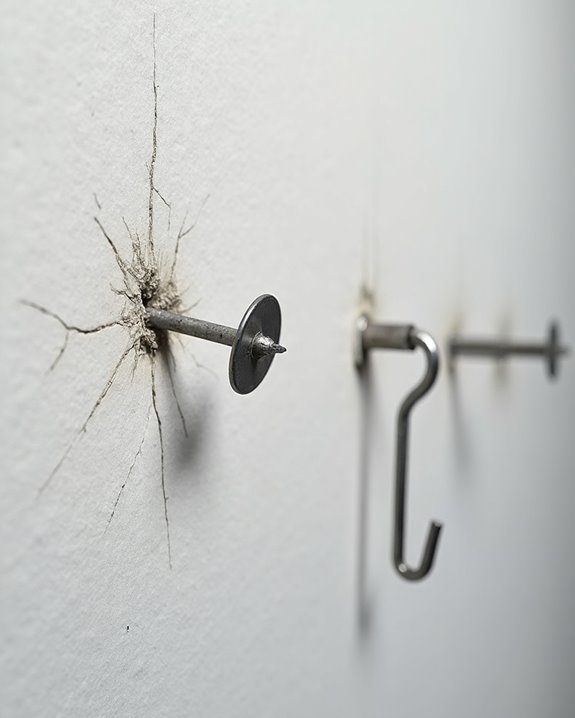
Weight capacity represents a significant limitation when using nails in drywall, as standard nail installations provide minimal holding power in this relatively soft material. Drywall alone typically supports very little weight when using conventional nails, with a maximum recommended capacity of just 10 pounds per nail to prevent failure. For anything exceeding this threshold, homeowners should choose screws or drywall plugs instead, as these provide greater surface area and superior grip within the gypsum material.
When attempting to hang anything of substantial weight, it’s important to recognize that nails are not capable of holding much weight without additional support structures. Most professional installers require a pilot hole and use screws for medium to heavy items, reserving nails exclusively for decorative elements under 10 pounds.
Recommended Products

5 SIZES FOR VARIOUS PROJECTS – This 350 pcs wall anchors assortment kit with self drilling drywall anchors contains abundant size options, which are: #5*1", #7*1" ,#6*1-1/5", #8*1-3/5", #8*1-1/4", all clearly assorted in a compact organizer box. With these most widely used sizes of plastic wall anchors and galvanized Philips screws, you can handle almost all hanging projects like a pro. It can also replace picture hanging nails to help you hang picture frame of various sizes.

【100 Pcs Upgraded Quenched Dry Wall Anchors Kit】100pcs heavy-duty metal anchors and self-drilling screws quenched for higher hardness or strength, better toughness, longer durability, and more stable threads. As professional sheet rock anchors and metal wall anchors, they fit drywall, gypsum board, and lightweight bricks, eliminating the need for extra hardware in all your wall mounting tasks.

COMPLETE SET FOR VARIOUS MOUNTING NEEDS: This Heavy Duty Toggle Bolts Assortment Kit includes 164 pieces of drywall anchors, toggle bolts, and screws in multiple sizes to fit different installation requirements. The set contains 40pcs #6×1", 40pcs #5×1", 40pcs #7×1", 20pcs #6×1-1/5", 12pcs #8×1-3/5", and 20pcs black #8×1-1/4" wall anchors, along with toggle bolts in 1/4" (4pcs), 3/16" (12pcs), and 1/8" (16pcs). Ideal for mounting shelves, mirrors, or curtain rods.
Nails vs. Screws: Comparing Holding Power in Drywall
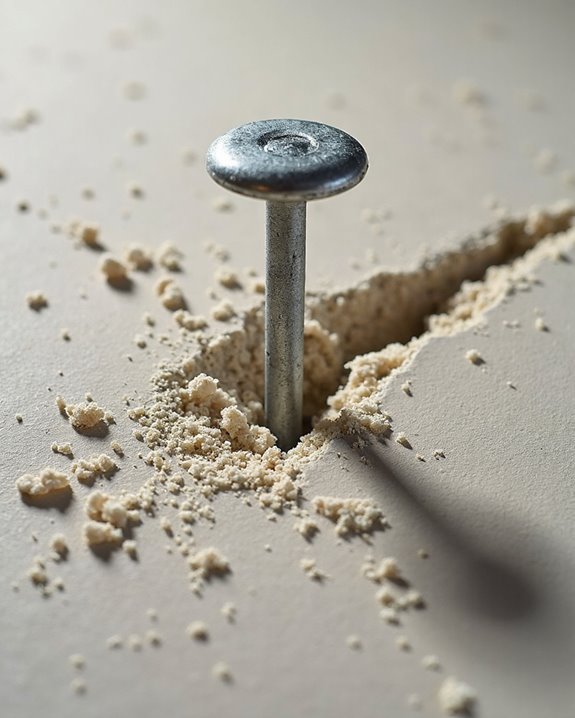
How do nails truly compare to screws when securing items to drywall? The evidence clearly demonstrates screws’ superior holding power, with a #4 screw in a stud supporting up to 100 pounds compared to a nail’s mere 20-pound capacity. This significant difference makes screws the preferred fasteners for drywall installations requiring durability and stability.
Screws effectively penetrate studs with their self-starting tips, maintaining consistent holding power over time, while nails tend to loosen gradually, causing visible pops and surface damage. Building codes recognize this disparity, typically requiring fewer screws than nails to achieve equivalent stability in drywall applications. Although nails remain more economical for lightweight applications, their limited holding capacity makes them unsuitable for substantial loads, where screws or expansion anchors provide necessary long-term reliability.
Recommended Products

STRONG HOLD FOR DRYWALL TO METAL STUD INSTALLATION: Fine thread drywall screws provide superior grip when fastening gypsum board and wallboard panels to metal framing studs, helping prevent screw pop and loosening over time.

MATERIAL OF THE HIGHEST GRADE - The black wood screws assortment kits are constructed of brand new material of the highest possible quality, which has an exceptional degree of brittleness. The surface has been galvanised and phosphated, which provides exceptional protection against rust and a fast and efficient self-tapping speed.

SIZE AND QUANTITY: #6-40 x 1-5/8 in fine thread self drilling drywall screws pack contains 180 pieces; weighs 1 lb provides reliable fastening for drywall installation
When Nails Work Best for Drywall Projects
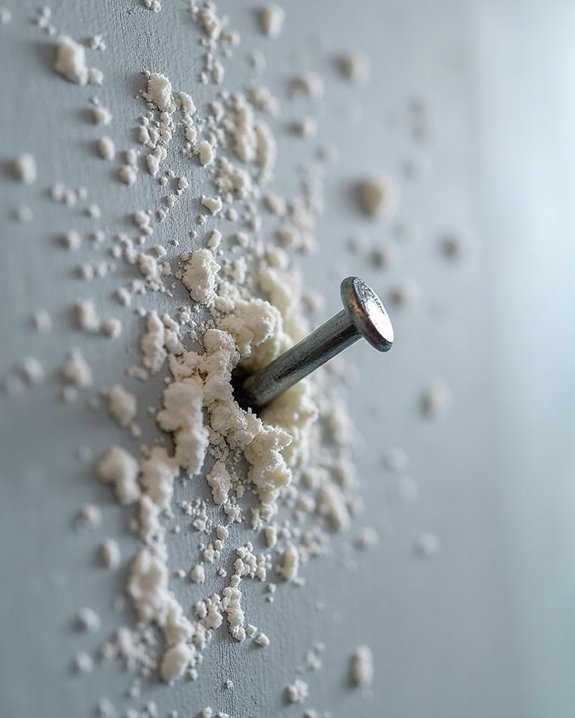
Despite their lower overall holding capacity, nails remain valuable tools in specific drywall applications where their unique properties offer practical advantages. When attaching drywall to wood studs in wall installations, it’s important to use ringed or barbed shank nails, which can reliably return to one stable position and hold up to 20 pounds when driven at a 45-degree angle. Drywall wall projects benefit when contractors take into account cost efficiency, as nails are more economical than using a drywall screw gun setup.
For perimeter fastening, make sure to space nails every 8 inches on wood framing, and consider double-nailing panels to minimize nail pops. According to Home Improvement Stack Exchanges, cement-coated nails are particularly effective for non-structural, lightweight applications where their resin coating enhances holding power.
Proper Nail Installation Techniques for Maximum Strength
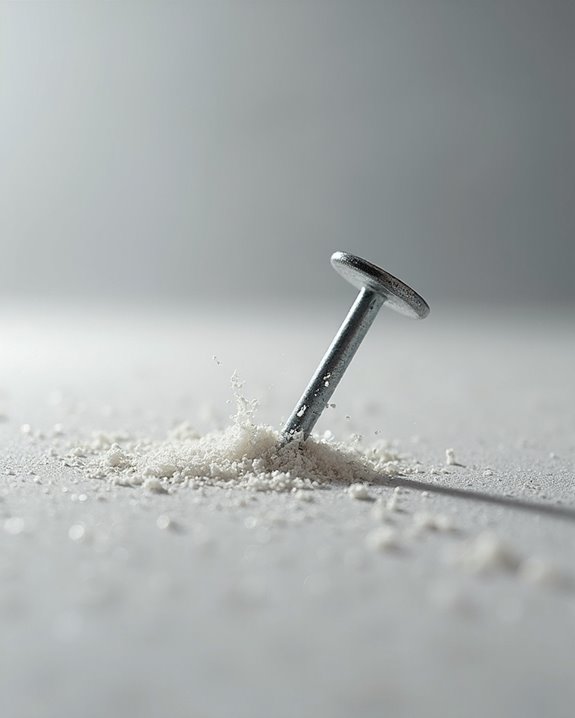
The effectiveness of drywall nails depends greatly on proper installation techniques that maximize their holding power. Home improvement professionals recommend using drywall nails with ringed or barbed shanks, which are thicker than expansion anchors and provide superior grip in the material. When hanging items, driving nails at a critical point—a 45-degree upward angle into studs—ensures a 1.5-inch nail can support up to 20 pounds.
Tips on writing great installations include spacing ring nails every 8 inches along perimeters to distribute weight evenly. The source and reason for double-nailing panels is to minimize nail pops in movement-prone areas. Improvement Stack Exchange’s artificial separation between nails creates redundancy that reinforces holding power. Statements based on opinion may vary, but experts are sure to answer that proper angle placement at right angles preserves drywall integrity.
Recommended Products

Perfect nail for deck, patio, fence, and other outdoor construction

Huttig-Grip Drywall Nail 1-1/4 inches Ring Shank, Bright Finish HGN114RSDWN5-5 lb Pack of 1695 Nails
Drywall Nail for attaching sheets of drywall to wood studs.

CLASSIC DESIGN: These siding nails by Simpson Strong-Tie are given a diamond point for easy driving, the most common point type in most hardware. These are manufactured with a head diameter of 0.083 inches, and length of 1-1/4 inches.
Alternative Fastening Solutions for Heavier Items
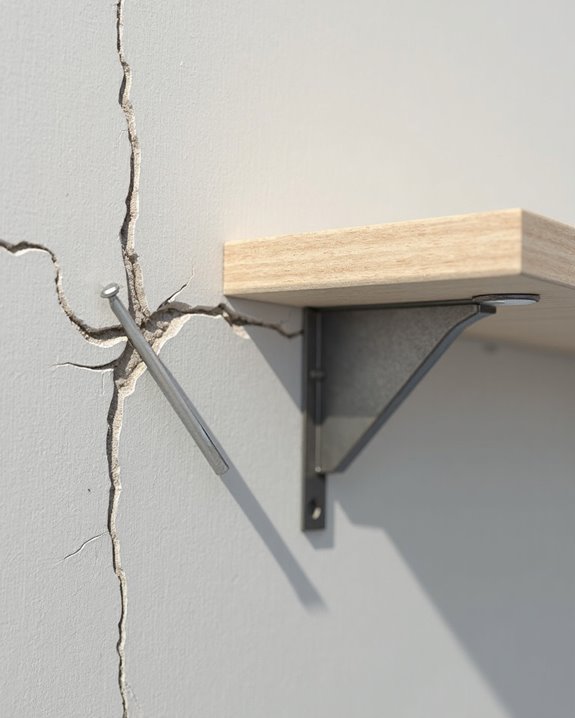
While standard drywall nails serve adequately for lightweight decorations, homeowners requiring support for items exceeding 10 pounds must consider alternative fastening solutions. Expansion anchors provide reliable support for objects weighing 5 to 25 pounds by distributing pressure when tightened, while threaded anchors offer enhanced capacity of 25 to 75 pounds without requiring pilot holes.
For substantially heavier items, toggle bolts represent an excellent option, supporting up to 100 pounds through their spring-loaded mechanism that expands behind the drywall. Sleeve anchors, including molly bolts, provide intermediate support of 25 to 50 pounds by gripping both sides of the drywall surface. The most secure method, however, involves mounting directly to wall studs using screws that penetrate at least 1 inch into the wood, creating a hold capable of supporting 100 pounds.
Recommended Products

FIVE ESSENTIAL SIZES FOR MULTIPLE PROJECTS: This dry wall anchors and screws kit comes with five of the most widely used sizes: #6 1", #7 1", #6 1-1/5", #8 1-3/5", and #8 2-2/5". It works for all types of hanging installation needs, and pairs great with a drywall repair kit, whether you’re mounting shelves, fixing curtain rods, or hanging bathroom living room wall decor.

【SPECIFICATIONS】370pcs Kit includes 5 different size plastic ribbed drywall anchors

Premium Material: These heavy duty drywall anchors, toggle bolt are made of carbon steel with zinc plated surface, plastic wall anchors are made of high-quality nylon plastic, which is rust resistant, wear resistant and corrosion resistant. This ensures the excellent strength and hardness of wall anchor. These dry wall anchors will make your home repair job much easier.
Frequently Asked Questions
How Do You Get Nails to Stay in Drywall?
Nail grip in drywall improves with proper wall fasteners like ringed shank nails. Secure hammering into studs at 45-degree angles enhances holding power. Drywall anchors offer additional stability, preventing slipping and increasing fastener longevity.
Is It Better to Screw or Nail Drywall?
Screw advantages include superior material strength and fastener longevity compared to nails. While nail durability varies, screws offer better cost efficiency, improved surface finish, faster installation speed, and easier removal, making them the preferred choice for drywall installation.
Can Drywall Support Human Weight?
Light as a feather, drywall lacks the structural integrity to support human weight. Its limited load-bearing capacity falls well below safety standards, posing serious hanging risks. Building codes require proper support systems for human safety concerns.
Can You Nail Into Drywall Without Studs?
Nailing into drywall without studs is possible but unreliable. Wall preparation affects success, while nail angles impact holding power. DIY advice: choose appropriate tools and consider aesthetic effects. For safety, use anchors for items exceeding 10 pounds.